2009/08/06

Junnu

In the 1920's, comics were widely read by children and adults alike. Somehow, a collective amnesia ensued after WW2 in the Western world, and comics were increasingly demoted to "kid's stuff" and regulated as a potential threat to the child's development. (In Japan, comics were reborn as the modern manga instead, but that's another story.)

One of the most popular comics in Finland was the homemade "Junnu", written by Veli Giovanni (humour editor of the popular weekly Suomen Kuvalehti) and drawn by Alexander Tawitz and Poika Vesanto (who introduced speech bubbles)and later by Arnold Tilgmann. The following page is an example of A. Tawitz's artwork from 1929. It's a meta comic discussing readers' opinions of Junnu's personality - should he be nice or naughty?


Junnu, the protagonist, was a young man with a prominent nose and an eternal crush on the pretty Alli. Nice guy Junnu's everyday adventures recycled some ancient comic strip themes: his awkward attempts at romance would annoy Alli, which gave the dandy rival Tip-top-Olli an advantage. Junnu's little helpers, the mischievous twins Niku and Naku, would often cause more shenanigans. The Junnu stories are like a realistic version of Donald Duck's triangle drama, of course created many years earlier.

Junnu appealed to both children and adults. Junnu merchandise included a china set, a toothbrush set and tableware.

Junnu strips have been republished in the anthology Laikku 05 - Kotimaiset kuvasarjat 1900-1945. (Review in Finnish)

2009/05/16

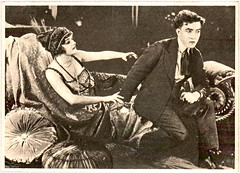
Sessue Hayakawa


Sessue Hayakawa, originally uploaded by punalippu.

The Japanese-born Hollywood star in the silent film His Birthright from 1918.

2009/05/08

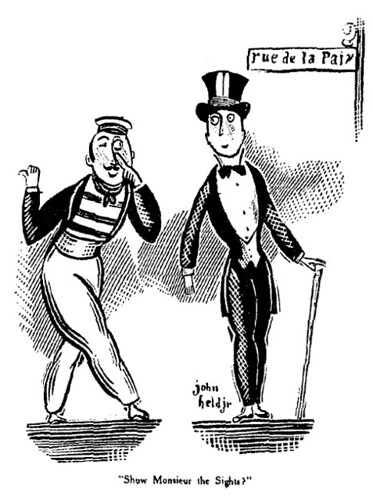
John Held Jr.


The Jazz Age cartoonist par excellence, with a handsome doggy (from the Condé Nast archives, which for some reason won't work in my browser right now).

"Show Monsieur the sights?"


"Show Monsieur the sights?", originally uploaded by punalippu.

Very early cartoon by John Held Jr. in The New York Times, 1920. His style would develop in a completely different way during the twenties.

You can compare samples of his early and later work here.

2009/04/16

Hero of the (r)Evolution

During 1925, Watson Davis (1896-1967), Science Service managing editor, took numerous photographs while covering the State of Tennessee v. John Thomas Scopes trial as a reporter. In what was dubbed "The Trial of the Century," Scopes was tried and convicted for violating a state law prohibiting the teaching of the theory of evolution.

Nice glasses and boater. What's up with the stylish scientists 80 years ago? See previous post.